
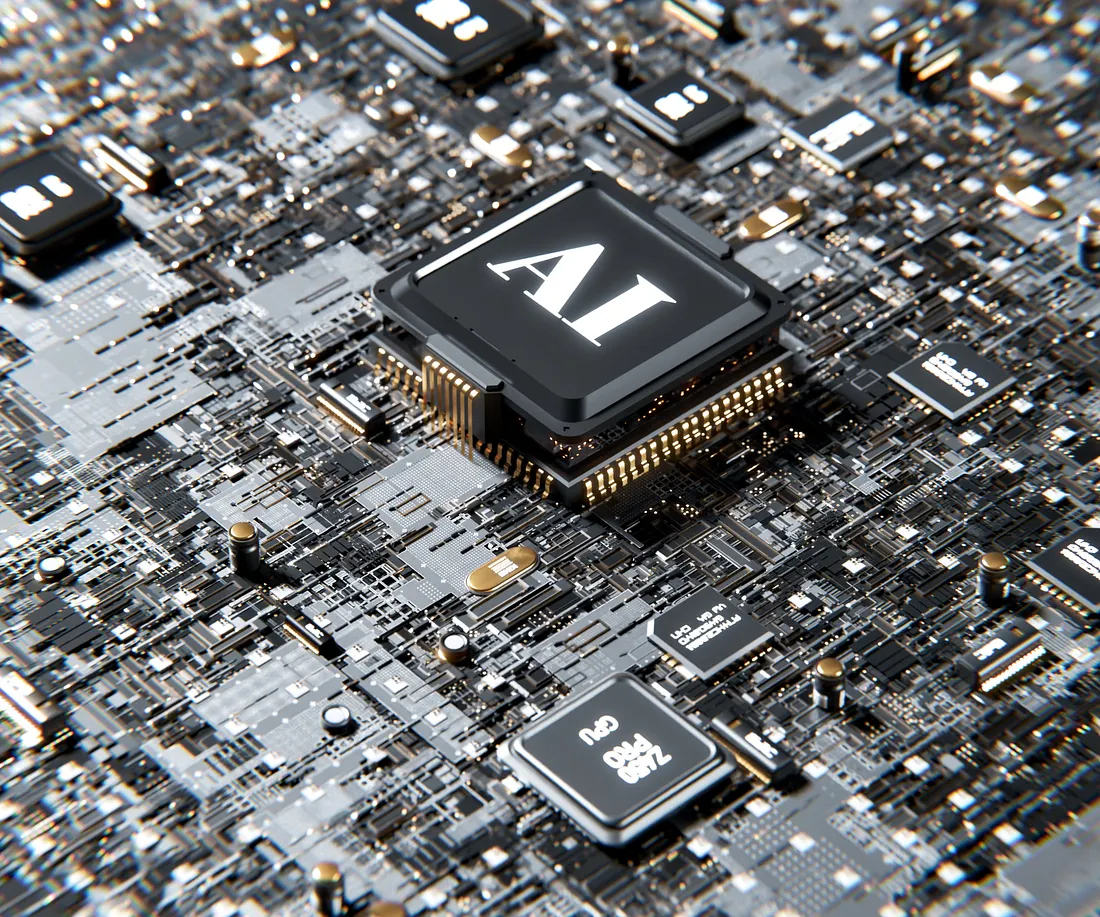
The old idea is getting a second hearing because AI keeps asking one expensive question: why move numbers so far to multiply them? The Analog Computing Revival matters because many neural networks spend more energy hauling weights between memory and processors than doing useful math. That does not mean your next laptop will trade its CPU for a slide-rule spirit board. It means certain AI jobs, from speech recognition to sensor inference, may run better when memory and calculation sit in the same physical place. For U.S. readers watching data centers spread across Virginia, Texas, Ohio, and Arizona, this is no lab curiosity. It is about power, cooling, latency, and whether small devices can think without calling the cloud. Readers following AI hardware and technology news should treat analog AI as a targeted tool, not a miracle cure. The strongest case appears where the task repeats matrix math, tolerates small hardware noise, and rewards lower data movement. That narrow lane is where analog AI chips, in-memory computing, and energy efficient AI start to feel less like nostalgia and more like practical engineering.
Why Analog Computing Revival Is Returning Through Narrow AI Math
Digital processors became dominant because they are exact, programmable, and easy to scale across many kinds of software. That history still matters. Analog systems are not coming back because digital machines failed. They are coming back because AI exposed an ugly cost hidden inside modern computing: moving data can burn more time and power than the arithmetic itself. The U.S. Energy Information Administration now tracks server electricity demand as a growing part of commercial buildings, while the International Energy Agency says global data center electricity use is rising fast with AI as one driver.
Why matrix math fits the analog habit
A neural network is full of weighted sums. A camera model, a speech model, or a small language model may repeat the same style of multiply-and-add operation millions of times. Digital hardware handles this with binary precision, moving values from memory into compute units, then moving results again. It is clean. It is also hungry.
This is why the old “compute in one place, store in another” habit starts to feel costly. The von Neumann split works well for general software, but AI inference often behaves like a clerk walking across a giant warehouse for the same box again and again. The walk becomes the job.
IBM Research’s explanation of analog in-memory computing describes this as joining memory and computation to reduce the weight movement that slows and drains inference, especially for certain transformer and mixture-of-experts designs.
That sounds strange only if you expect every computer to act like a laptop. In a thermostat, a car sensor, or a warehouse camera, the question is often not “Can this system run every program?” It is “Can this system detect the right event with low power and low delay?” Analog AI chips make the most sense when the job is fixed enough to map onto hardware, yet valuable enough to repeat all day.
A Boston hospital, for instance, might not want a bedside device sending every signal to a distant server. It may need a local screen for breathing patterns or equipment alarms. The goal is not to replace the hospital’s main AI system. It is to avoid waste before the larger system gets involved.
Why “less exact” can still be good enough
The counterintuitive part is that AI often does not need perfect arithmetic at every step. A neural network is already a statistical machine. It sorts patterns, ranks probabilities, and survives a degree of roughness if the model is trained or adapted for it. That is why analog noise is not always fatal.
It can still be a headache. IBM’s 2025 work on analog foundation models notes that noisy computation and strict quantization limits remain real obstacles for off-the-shelf large language models. The point is not that analog hardware gets a free pass. The point is that model design, training, and chip design now have to grow together.
A practical example is a smart doorbell in Phoenix during a heat wave. Sending every video frame to the cloud adds delay, bandwidth cost, and energy use. A local model that screens for motion, faces, packages, or unusual behavior may not need server-grade precision for every calculation. It needs a fast, low-power first pass. That is where energy efficient AI can be a better goal than perfect arithmetic.
The trick is not to excuse sloppy output. It is to decide where precision matters. A face unlock system needs a different safety margin than a porch light trigger. A warehouse scanner can flag uncertainty and pass the case upward. Good analog design gives the product a ladder, not a cliff.
The Workloads Where Analog AI Chips Make Real Sense
The strongest analog use cases share one trait: the math sits close to the physical world or repeats in a narrow pattern. That is why sensors, speech, radar-style correlation, image screening, and certain inference layers keep appearing in serious research. You can think of these as jobs with a steady rhythm: read the signal, compare it with learned patterns, decide whether the next system should wake up. If the workload changes every second, needs broad software support, or demands exact accounting, digital remains the safer bet. But when a model asks the same kind of question again and again, analog starts to look less odd.
Edge devices need answers before the cloud responds
Edge AI is where analog feels most honest. A factory camera in Michigan does not need to chat about poetry. It needs to spot a cracked part before the belt moves on. A farm sensor in Iowa does not need a full cloud stack to notice a pump vibration pattern. It needs a low-power decision that keeps running when the signal is weak and the budget is tight.
That pattern also fits consumer devices. Earbuds, baby monitors, security cameras, and wearables all sit inside tight thermal and battery limits. The product feels better when it does not heat up, lag, or beg for charging. In-memory computing can support that kind of quiet improvement.
Nature published work on an analog-AI chip for speech recognition and transcription that used phase-change memory across many tiles and reported chip-sustained performance up to 12.4 tera-operations per second per watt. The paper also showed that analog AI could approach or match software accuracy on selected speech tasks, though the system was still a research chip rather than a market-ready product.
That second sentence matters. It keeps the hype in check. A lab chip that performs well on selected benchmarks is not the same thing as a cheap part inside every phone. Packaging, yield, software tools, calibration, and developer trust all have to arrive. Still, the direction is clear: speech and sensor inference are among the first places where in-memory computing can earn its keep.
Defense and sensing workloads expose the power problem
Analog also fits a class of signal problems where the incoming data starts as analog. Sound waves, radio waves, images, heat, vibration, and light do not begin life as neat digital bits. Most systems convert them into digital form, process them, then sometimes convert them again. Every conversion adds cost.
DARPA’s ScAN program focuses on analog neural networks that connect directly to analog sensor outputs. Its stated aim is to reduce dependence on power-hungry converters and improve efficiency for size, weight, and power limited systems.
Another DARPA effort, Massive Cross-Correlation, targeted non-purely-digital signal processing for correlation-heavy tasks and sought a 100x gain in power efficiency and information processing density over digital signal processing systems of its time. That program is now complete, but it shows why U.S. defense research keeps circling back to analog methods.
The non-obvious lesson is that analog may win before the data becomes “AI data.” A drone, medical scanner, or roadside sensor may save the most energy by avoiding needless conversion and movement at the front door. That is a different story from replacing a data center GPU. It is more modest. It is also more believable.
This front-door advantage may matter in rural broadband areas too. A farm, pipeline station, or remote clinic cannot assume perfect cloud access. Local sensing that filters events on-site can reduce network traffic and improve response time. The value is not only lower power. It is independence.
Why Digital Systems Still Control Most AI
A smart reader should stay skeptical. Digital processors are not popular by accident. They offer repeatable results, mature tools, broad software support, and easy debugging. If a bank in New York runs fraud checks, it wants traceability. If a hospital system uses AI for patient workflow, it wants audit trails. If a developer changes a model every week, digital hardware is easier to manage. Analog systems need calibration, error handling, and software methods that respect the quirks of the device.
General-purpose flexibility still has value
The great strength of digital hardware is not only speed. It is freedom. A GPU can run image models in the morning, language models in the afternoon, and simulation code at night. That flexibility is worth money because AI demand changes faster than buildings and chips can be planned.
This is why analog AI chips are better understood as helpers, not heirs to the throne. They may handle certain layers, repeated vector-matrix math, or always-on detection, while CPUs and GPUs handle control logic, high precision steps, memory management, security, and software updates. Hybrid design is not a compromise born from weakness. It is the natural shape of the problem.
You already see this pattern in ordinary electronics. Phones use separate blocks for graphics, cameras, security, radios, and neural tasks because one kind of engine cannot be best at everything. AI hardware is moving the same way. The question is which block earns a place on the board.
IBM’s research on transformer attention shows the same tension. Some transformer operations are harder to map into analog because values change during inference and may require techniques such as kernel approximation to avoid constant device reprogramming. That is a warning label, not a defeat.
Noise turns hardware into a training problem
Analog hardware is physical in a way software people can feel. Devices drift. Temperature matters. Manufacturing variation matters. A stored weight may not behave exactly like a number in a digital register. For a spreadsheet, that would be absurd. For some neural models, it can be managed.
The catch is that management shifts work upstream. Engineers may need noise-aware training, quantization limits, calibration passes, and model structures that avoid sensitive layers. That adds effort. It also means analog systems will not support every model a company wants to run.
Picture a U.S. retailer with thousands of stores. It might want small cameras to detect empty shelves. If the task is narrow, a low-power analog-assisted chip could make sense. But the same retailer may also want weekly model changes for new packaging, promotions, theft patterns, and store layouts. At that point, the software team may prefer a standard accelerator even if the power bill is higher. The best chip is not always the most efficient chip on a chart. It is the one the team can trust on Tuesday afternoon.
What U.S. Companies Should Watch Before Betting on In-Memory Computing
The analog story becomes useful when buyers ask sharper questions. A startup pitch may claim lower power. A research paper may show strong throughput. A vendor demo may look clean under lab conditions. None of that answers whether a hospital device, warehouse camera, auto sensor, or data center appliance should commit. The buyer needs to ask where the model runs, how often it changes, how much accuracy can move, and whether the savings survive the full system.
The full system can erase a chip-level win
A chip can be efficient while the product disappoints. Data conversion, memory interfaces, cooling, packaging, drivers, and fallback digital logic all take power and space. If analog math saves energy but the system spends it back in converters and control circuits, the gain shrinks.
That is why the best analog claims focus on system design, not isolated arithmetic. Nature’s 2025 analog optical computer paper, for example, argues that reducing frequent digital conversions is central to its AI and optimization approach. The paper also makes clear that the hardware and computational abstraction were designed together, which is the part many product pitches skip.
For an American manufacturer, the purchasing test should be plain. Does the device reduce wall-plug power, heat, latency, or cloud traffic in the real workflow? If not, the internal math score does not matter. Factory managers do not buy tera-ops. They buy fewer line stops, fewer truck rolls, and fewer overheated boxes above a loading dock.
Procurement teams should also ask who owns the software path. Can the model be updated without a lab team? Can the device report drift? Can it fall back to a digital path when confidence drops? Those boring questions decide whether a clever chip survives contact with real operations.
The best early markets may look boring
The first wins may not be flashy chatbots. They may be inspection cameras, wake-word systems, signal filters, battery-powered health devices, vibration monitors, and automotive sensors. Boring is not bad. Boring is where hardware becomes dependable.
This is also where practical AI infrastructure planning and edge device performance strategy matter. If a device runs all day in a school, warehouse, clinic, or delivery truck, shaving power from a repeated inference task can have more value than making a demo model answer a prompt faster. The economics come from repetition.
The counterintuitive business insight is that analog may enter through “small” decisions that happen billions of times. A camera deciding whether to wake a larger model. A sensor deciding whether vibration is normal. A headset filtering noise before speech recognition. Each event is tiny. Together, they shape battery life, network load, and local privacy.
Conclusion
Analog’s comeback will not look like a sudden takeover. It will look like quiet placement in the parts of AI where physics can do cheap work before software gets involved. That is the right way to judge it. Digital systems still win on flexibility, exactness, developer tools, and broad deployment. They will remain the center of most AI stacks for years.
That is why the Analog Computing Revival should be measured by fit, not drama. The best matches will be repeated inference, sensor-first systems, narrow edge models, and memory-heavy neural math where small errors can be trained around. The weakest matches will be fast-changing software tasks, high-precision records, and models that need broad support from day one.
For U.S. companies, the practical move is not to chase a buzzword. Ask where your AI burns power, where data movement hurts, and where a local decision beats a cloud round trip. Then test the full product, not only the chip. The future belongs to teams that pick the right kind of compute for the job.
Frequently Asked Questions
What AI workloads are best for analog chips?
Repeated inference tasks are the best fit, especially speech, image screening, sensor analysis, and vector-matrix math. These jobs repeat similar operations many times and can often tolerate controlled noise when the model is trained for the hardware.
Is analog AI better than GPU computing?
No single answer covers all AI. GPUs remain better for flexible, broad, fast-changing workloads. Analog AI can be better for narrow tasks where memory movement, power draw, and latency matter more than perfect arithmetic across many software types.
Why does in-memory computing save energy?
It reduces the need to move model weights back and forth between memory and compute units. Since data movement can cost a large share of energy during inference, keeping calculation near stored weights can improve efficiency.
Can analog hardware run large language models?
Some research points toward analog support for parts of language models, but full deployment is still hard. Noise, quantization limits, changing attention values, and software tooling make large models harder than smaller edge inference tasks.
Will analog AI chips replace data center GPUs?
Replacement is unlikely in the near term. A more realistic path is hybrid systems, where analog handles selected math-heavy parts and digital processors handle control, precision, memory, updates, and broad software support.
Are analog AI systems accurate enough for real products?
They can be accurate enough for selected tasks, especially when models are trained or adapted for the hardware. High-risk uses need careful testing, backup logic, calibration, and clear limits before deployment.
Why is analog computing useful for edge devices?
Edge devices often have tight power, heat, cost, and latency limits. Analog methods can help local sensors make quick first-pass decisions without sending every signal to the cloud.
What should companies check before buying analog AI hardware?
They should test full-system power, accuracy, heat, software support, calibration needs, and update workflow. A chip-level benchmark is not enough. The product must save energy or time in the real environment where it will run.