

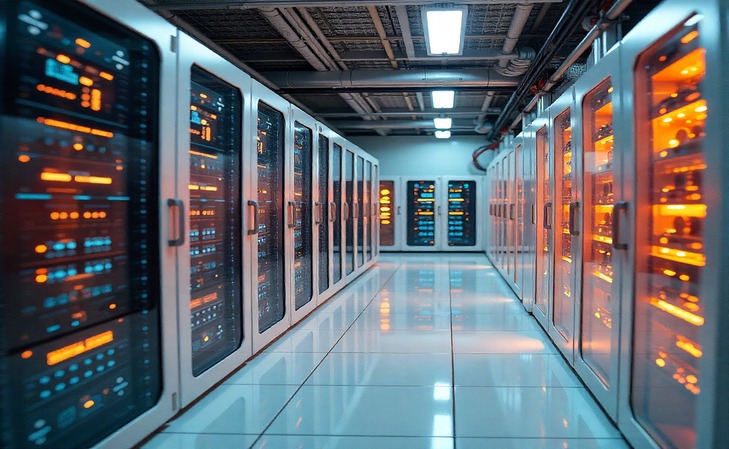
As organizations generate more data and rely on digital services for daily operations, data center infrastructure has become a critical foundation for business continuity, security, and growth. Whether supporting cloud environments, hybrid IT, or enterprise applications, modern infrastructure must deliver reliability, flexibility, and operational efficiency. Instrata understands that businesses need infrastructure strategies that support both current demands and future expansion without compromising performance.
Why Data Center Infrastructure Matters
Every digital service depends on a stable infrastructure behind the scenes. Data center infrastructure includes the physical and virtual components that enable computing, networking, storage, power distribution, cooling, monitoring, and security.
When infrastructure is designed strategically, organizations benefit from:
- Higher system availability
- Better application performance
- Improved cybersecurity readiness
- Reduced operational downtime
- Greater scalability for future growth
- More efficient energy usage
As organizations continue adopting cloud technologies, artificial intelligence, and edge computing, infrastructure has shifted from being a support function to becoming a strategic business asset.
Core Components of Modern Data Center Infrastructure
Building resilient infrastructure requires more than purchasing quality hardware. Each layer must work together to support business-critical workloads.
Compute Resources
Servers remain the processing backbone of every data center. Today’s environments often combine traditional rack servers with virtualized platforms and high-density computing systems to maximize resource utilization.
Organizations should consider:
- Workload requirements
- Virtualization compatibility
- High-availability configurations
- Future capacity planning
Modern compute environments are increasingly designed to support both on-premises applications and cloud-connected workloads.
Storage Systems
Business data continues growing at an unprecedented pace. Storage infrastructure must provide performance while protecting valuable information.
A balanced storage strategy often includes:
- High-speed flash storage
- Large-capacity storage arrays
- Backup systems
- Disaster recovery replication
- Long-term archival solutions
Selecting the appropriate storage architecture depends on recovery objectives, compliance requirements, and application performance needs.
Network Infrastructure
Reliable networking connects every component inside a data center while providing secure communication with users and cloud platforms.
Modern network infrastructure typically includes:
- Core switching
- High-speed Ethernet
- Software-defined networking (SDN)
- Firewalls
- Load balancers
- Secure remote connectivity
As bandwidth demands increase, organizations must design networks that minimize latency while supporting future expansion.
Designing Scalable Data Center Infrastructure
One of the biggest challenges organizations face is designing infrastructure that supports growth without requiring constant replacement.
Scalable data center infrastructure focuses on modular expansion rather than complete redesigns.
Key design principles include:
- Build with standardized components.
- Plan additional rack capacity.
- Reserve power and cooling headroom.
- Use virtualization to maximize resources.
- Automate infrastructure management.
- Monitor performance continuously.
A modular approach allows organizations to expand as business requirements evolve while controlling capital expenditures.
The Role of Power and Cooling
Even the most advanced servers cannot perform reliably without stable power and effective cooling.
Power infrastructure generally includes:
- Uninterruptible power supplies (UPS)
- Backup generators
- Power distribution units (PDUs)
- Redundant electrical systems
Cooling systems help maintain safe operating temperatures while improving equipment lifespan and energy efficiency.
Modern cooling technologies include:
- Hot aisle and cold aisle containment
- Precision air conditioning
- Liquid cooling
- Intelligent airflow management
- Environmental monitoring
Together, power and cooling systems directly influence uptime and operational reliability.
Infrastructure Monitoring Improves Reliability
Organizations cannot manage what they cannot see.
Comprehensive monitoring provides visibility into infrastructure health before small issues become costly outages.
Important metrics include:
- CPU utilization
- Memory consumption
- Storage capacity
- Network performance
- Temperature
- Humidity
- Power usage
- Equipment health
Real-time monitoring enables IT teams to identify performance bottlenecks, predict failures, and improve operational planning.
Security Must Be Built Into Infrastructure
Cybersecurity begins with infrastructure design rather than software alone.
Modern infrastructure should incorporate multiple layers of protection, including:
- Physical access controls
- Video surveillance
- Network segmentation
- Identity and access management
- Encryption
- Multi-factor authentication
- Continuous vulnerability monitoring
Security should also extend to backup systems and disaster recovery environments to ensure data remains protected during unexpected events.
Supporting Hybrid and Multi-Cloud Strategies
Today’s organizations rarely rely on a single infrastructure model.
Many businesses operate across:
- On-premises data centers
- Private cloud
- Public cloud
- Edge locations
Hybrid environments provide flexibility while allowing organizations to place workloads where they perform best.
Successful hybrid strategies require infrastructure capable of supporting consistent networking, security, monitoring, and management across multiple environments.
Sustainability Is Becoming a Business Priority
Energy consumption has become an important consideration for modern data centers.
Organizations increasingly seek infrastructure solutions that reduce operational costs while supporting environmental goals.
Sustainability initiatives may include:
- Energy-efficient servers
- Intelligent cooling systems
- Renewable energy integration
- Server consolidation
- Virtualization
- Automated power management
Reducing energy consumption benefits both operational budgets and corporate sustainability initiatives.
Common Challenges Organizations Face
Building modern infrastructure involves balancing performance, cost, and long-term flexibility.
Common challenges include:
- Aging hardware
- Rising energy costs
- Limited scalability
- Increasing cybersecurity risks
- Complex hybrid environments
- Budget constraints
- Limited IT resources
Addressing these challenges requires strategic planning rather than reactive upgrades.
Organizations that regularly assess infrastructure performance are better positioned to adapt to changing technology requirements.
Best Practices for Future-Ready Infrastructure
Organizations planning future investments should focus on long-term operational value instead of short-term fixes.
Recommended best practices include:
Standardize Infrastructure
Standardized platforms simplify deployment, maintenance, and lifecycle management while reducing operational complexity.
Design for Redundancy
Redundant power, networking, and storage help minimize downtime during equipment failures or maintenance activities.
Invest in Automation
Automation reduces manual tasks, improves consistency, and accelerates infrastructure provisioning.
Automation can support:
- Configuration management
- Software updates
- Resource allocation
- Backup scheduling
- Incident response
Monitor Capacity Continuously
Capacity planning should be an ongoing process rather than an annual exercise.
Continuous monitoring helps organizations:
- Predict future demand
- Avoid resource shortages
- Improve budgeting
- Reduce unnecessary hardware purchases
Prioritize Security Throughout the Lifecycle
Infrastructure security should evolve alongside changing threats.
Regular assessments, software updates, and access reviews strengthen security while supporting compliance requirements.
Preparing for the Next Generation of Data Centers
Emerging technologies continue reshaping infrastructure requirements.
Artificial intelligence, machine learning, edge computing, and increasingly connected devices require infrastructure capable of supporting larger workloads with lower latency.
Future-ready organizations will likely focus on:
- Greater automation
- AI-assisted infrastructure management
- Higher-density computing
- Enhanced energy efficiency
- Improved resiliency
- Simplified hybrid operations
Rather than reacting to technology changes, organizations that build adaptable infrastructure today can more easily support tomorrow’s innovations.
Conclusion
Reliable data center infrastructure is no longer simply an IT requirement it is a strategic investment that supports business continuity, operational efficiency, cybersecurity, and long-term growth. Organizations that prioritize scalable design, resilient architecture, proactive monitoring, and integrated security create a stronger foundation for digital transformation. By working with experienced partners like Instrata, businesses can develop infrastructure strategies that remain dependable, adaptable, and prepared for evolving technology demands.